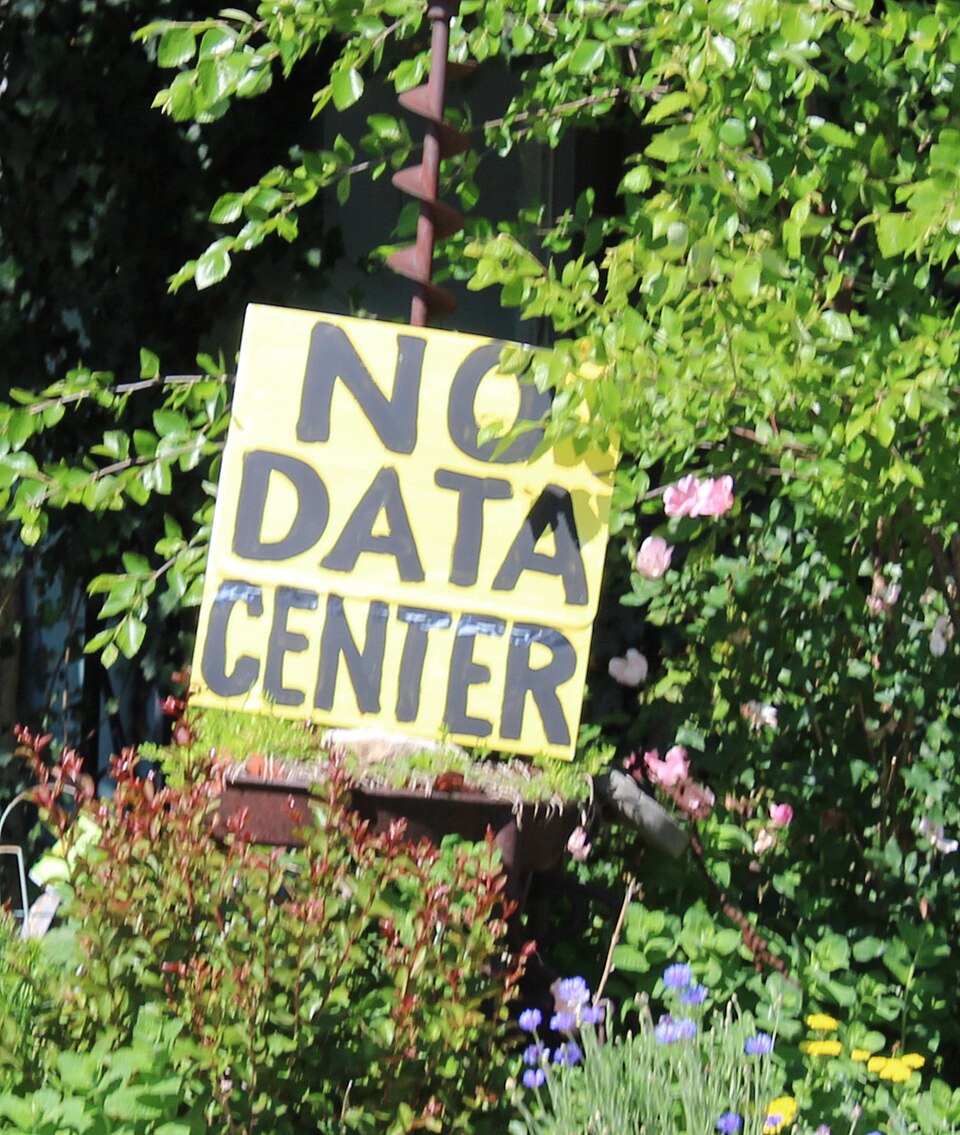
Protesters call for Gov. Shapiro, legislators to pass a data center moratorium in Pa.
Reprinted from Pennsylvania Capital-Star, 10-07-26
The state Capitol rotunda echoed with dissent Tuesday, Oct. 6, as dozens called on Gov. Josh Shapiro and lawmakers to enact a statewide moratorium on data center development.
At least 100 data center projects are proposed around the commonwealth, according to Shapiro’s office.
In August, he signed an executive order removing all proposals for the facilities from the state’s Fast Track permitting process and requiring developers to comply with responsible development standards.
But speakers at the rally were critical of Shapiro for his initial embrace of Amazon and other tech companies as they scoped out sites. The development guidelines that now encompass much of the commonwealth’s data center policy are too little, too late, they said.
“While he was cheerleading for this industry, communities, real communities like mine, were burdened with figuring out the consequences in real time, without a serious statewide framework of how to accommodate these kinds of developments at scale,” said Stuart Day, a Lawrence County farmer and co-founder of Ohio Valley Allies.
Day compared data center speculation to the commonwealth’s natural gas fracking boom in the 2010s, which former Gov. Ed Rendell compared to a gold rush. He later admitted he had regrets about prioritizing the economic benefits of shale gas development over the environment.
Data center development, Day said, is another example of rural economic colonialization, where land, labor, and resources are exploited and the value goes elsewhere.
“Data centers are simply the most recent incarnation of this very old pattern,” he said.
Shapiro spokesperson Rosie Lapowsky described the Governor’s Responsible Infrastructure Development Standards, enacted by Shapiro’s order, as the strictest in the nation. They’re designed to place legally binding requirements on developers to protect communities and the environment, ensure data centers pay for their own power and infrastructure and create well-paying jobs.
“Developers who want to do business in Pennsylvania need to meet these requirements, earn community support, and be good neighbors — if they can’t do that, they should look somewhere else,” Lapowsky said.
The rally, organized by the Better Path Coalition, brought together advocates for rural communities, faith groups and immigrant rights.
80 BILLS IN THE HOPPER
State lawmakers have introduced at least 80 bills this session dealing with data centers but few have become law. In July, Shapiro signed the state budget, which included legislation requiring larger data centers to report their energy and water usage to state regulators.
But data center opponents called on the General Assembly to pass Sen. Katie Muth’s (D-Chester) bill to impose a three-year moratorium on new development to give local officials time to assess risks and enact protective measures to ensure public safety.
They also delivered letters to Shapiro’s office, including one signed by 80 doctors, nurses and other health care providers opposing the construction and operation of hyperscale AI data centers in Pennsylvania due to the health harm, environmental impacts, and the burdens they would place on communities.
“Once a center is operational, pollution from diesel and gas generators are known to have severe health impacts,” said Josephine Gingerich of Physicians for Social Responsibility PA. She noted recent studies have suggested data centers could contribute to roughly 600,000 additional asthma cases a year nationwide and 1,300 premature deaths from the condition.
DATA CENTERS AND AI DRIVE MASS SURVEILLANCE
Teofilo Reyes of Make the Road Pennsylvania noted artificial intelligence and data centers drive the mass data integration and surveillance technologies U.S. Immigration and Customs Enforcement uses.
“Pennsylvania should not be a testing ground for mass surveillance,” Reyes said. “It should lead the country in protecting our privacy, our communities, and our freedom.”
Elected leaders in Pennsylvania have a duty under the state constitution to protect the environment from the degradation threatened by data center development, said Maya K. van Rossum,
The founder of the Green Amendments for the Generations called on elected officials to act to protect Pennsylvanians’ rights under the state constitution. Enacted in 1971, the constitution’s Environmental Rights Amendment creates a powerful right of the people to healthy environments and protected natural resources, van Rossum said, but it also gives leaders a duty to preserve them.
“Good government officials, like all of us here today, recognize that protecting our environment is good for everyone, regardless of our politics, where we live, our personal beliefs or our priorities,” she said, adding that good food, outdoor recreation and property values all depend on environmental quality.
“Knowing all of this,” she continued, “Pennsylvanians are offended that data center developers keep walking into our communities, declaring that they have rights, declaring that they have rights to build their data centers and devastate our environment, overwhelm our communities with massive development and unending noise, light, and pollution.”
Peter Hall has been a journalist in Pennsylvania and New Jersey for more than 20 years, most recently covering criminal justice and legal affairs for The Morning Call in Allentown. His career at local newspapers and legal business publications has taken him from school board meetings to the Pennsylvania Supreme Court and many points of interest between. He earned a degree in journalism from Susquehanna University.
Pennsylvania Capital-Star is part of States Newsroom, the nation’s largest state-focused nonprofit news organization.